Elementary
Elementary Program
Our Elementary Programs benefit the whole student through small class sizes and whole school community building. The small class size allows our teachers to fully know their students individually and meet their learning needs immediately. Grades combine in music, choir, gym, lunch, and recess sessions allowing students to have a whole school community. The mixing of grades provides students with unique opportunities to role model, encourage each other, and create diverse friendships that transcend the grades.
Students encounter God Daily. The Christian faith is an important part of St. Andrews Curriculum at every grade level. Students in each classroom pray daily. Every Wednesday morning they participate in Chapel Service in which each class from first through eighth grade takes turns planning and leading service. This unique experience introduces students to public speaking and leadership skills.
Students also learn the value of service to others through our school linkage to church and ministries that serve Chicago’s neediest populations. Classes regularly heed the call of those in need by organizing food and clothing drives as well as reaching out to the elderly.
Kindergarten
The St. Andrews Kindergarten program fosters academic, social, and spiritual growth. We are blessed to offer both half day and full day options consisting of engaging, innovative, and enriching activities. With Christ at the center, Kindergarten students participate in daily “Jesus Time”, listening to Bible stories, singing songs, learning prayers, and hearing about the gospel message.
Kindergarten uses a variety of teaching styles (i.e. small group, whole group, play) to accomplish our goal of developing each child in the classroom. Expanding on preschool aged concepts, our program advances on to teaching early reading and comprehension foundations using the Michael Heggerty Phonemic Awareness Program, Jolly Phonics Program, Literacy Centers (Reading/Writing), and differentiated learning. Students will develop their number sense in anticipation of simple operations and word problems, while also being introduced to simple geometry, patterning, sorting and measuring. The children engage in a variety of learning units that help them to understand the world around them (basic science and social studies concepts).
Primary – 1st & 2nd
The primary teachers work collaboratively to work on the basic skills to further students in their education. In addition to reading, writing, and math, our students enjoy learning about their community, our country, and the world through our Social Studies curriculum. Students visit the STEAM science lab, where they work together to explore, problem solve, create, and learn new concepts. Students also participate in PE classes where they develop physical fitness skills and learn good sportsmanship through teamwork. In the primary music program at St. Andrews, students learn skills such as keeping a steady beat, exploring pitch, and developing an appreciation for various styles of music. Students also participate in the church and community by singing in choir. Our social emotional curriculum strengthens the friendships that are built and gained at this age level. These friendships continue on as students have opportunities to interact with both older and younger students through school activities and service projects.
Intermediate – 3rd, 4th & 5th
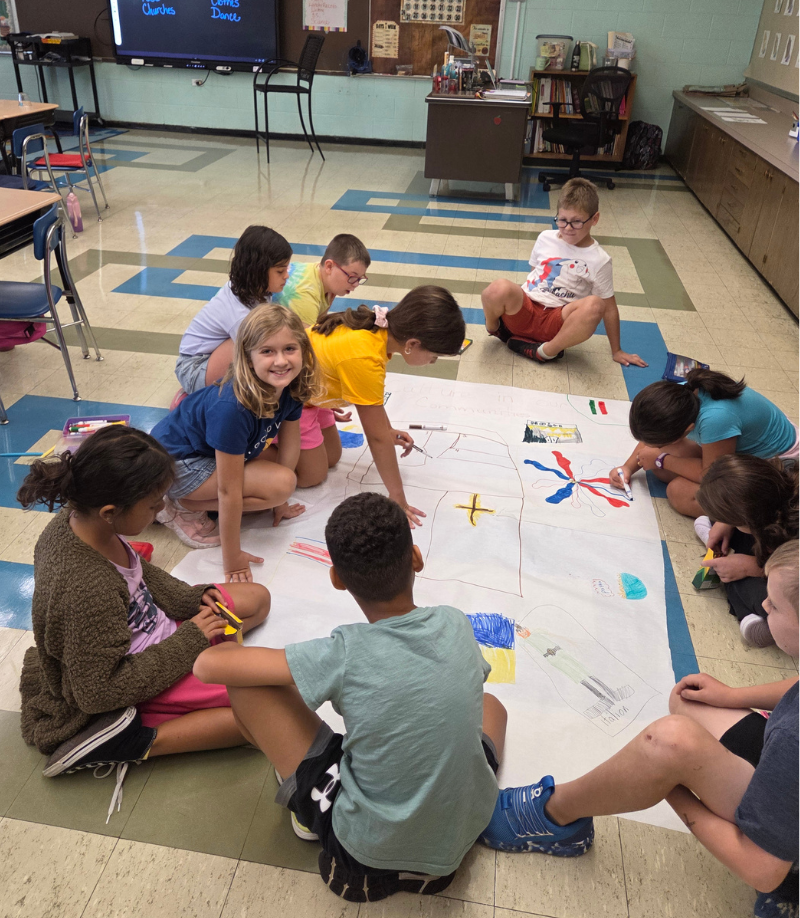
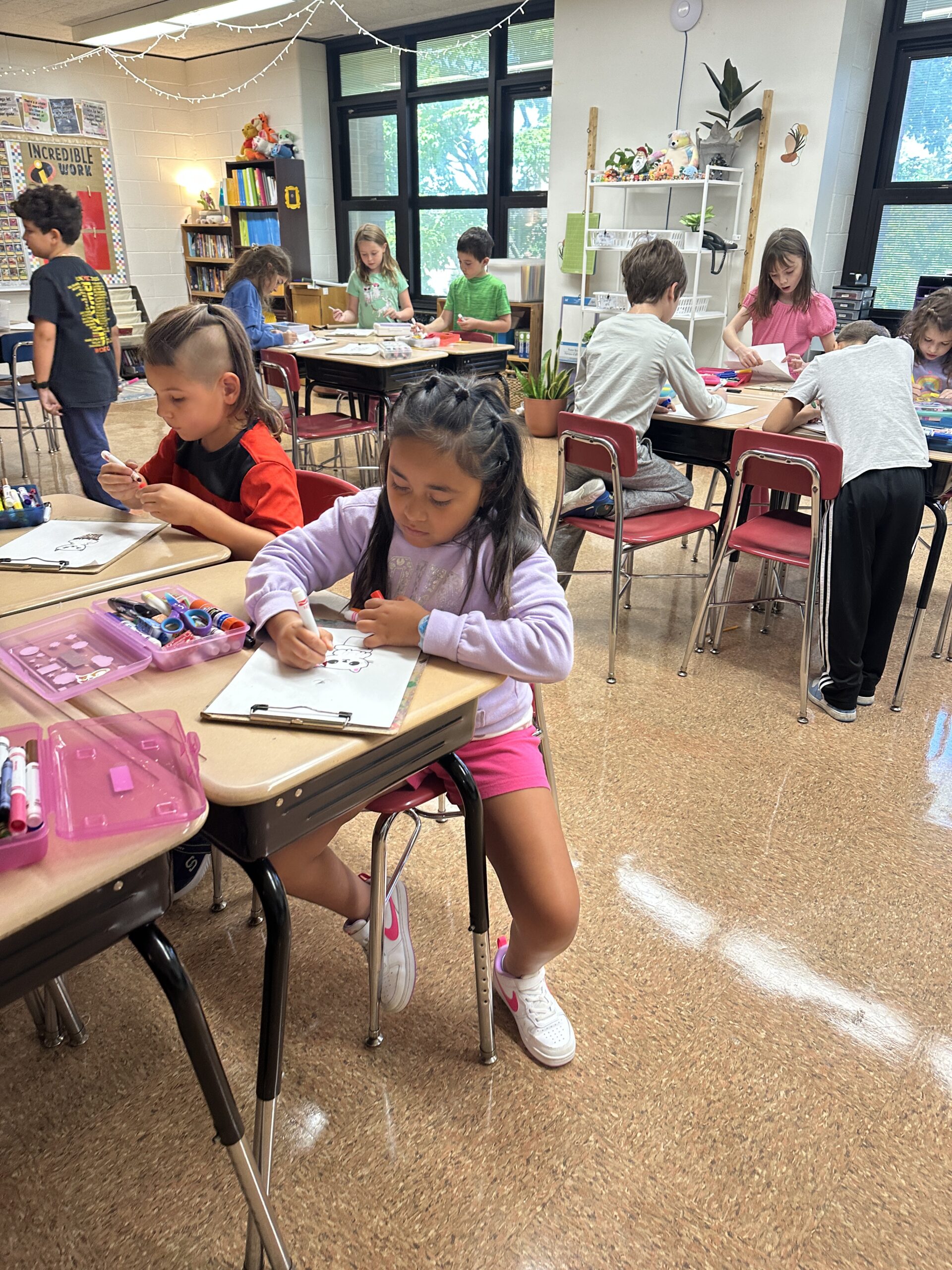
These are the years in which students are encouraged to grow as independent thinkers. From discovering how to add fractions to completing a novel study, our students in 3rd, 4th, and 5th grade are constantly achieving growth as they continue on their spiritual and academic paths here at St. Andrews. Some highlights for these grades include: Student Council, field trips, competitive sports, Battle of the Books, Band, Illinois history project, Spanish instruction, opportunities to lead worship in Chapel, and involvement in service projects that impact the community.
First through Fifth Grade
Elementary Curriculum
Math
In Kindergarten, students are introduced to foundational math concepts using the Go Math curriculum. They learn to count, recognize numbers, and explore basic addition and subtraction. Concepts such as shapes, measurement, and data are introduced through hands-on activities and visual supports that help them build early numeracy skills.
In Grades 1 and 2, students expand on these foundations with deeper work in number sense, computation, geometry, and data. First graders strengthen their understanding of numbers and simple operations, while second graders learn to tell time, count money, and solve three-digit addition and subtraction problems—all with an emphasis on real-world application.
In Grades 3–5, students develop fluency in more advanced math skills including multiplication, division, fractions, decimals, and geometry. Through the continued use of Go Math, students in 3rd, 4th, and 5th grades strengthen problem-solving abilities and build confidence in tackling multi-step challenges while preparing for middle school math.
ELA
Kindergarten students focus on building foundational literacy skills through a blend of Wonders by McGraw-Hill, Jolly Phonics, and Heggerty Phonemic Awareness. They explore letter recognition, letter sounds, rhyming, blending, and sight word reading while developing early grammar and writing skills. These programs support strong phonics instruction and encourage a love of reading from the start.
In Grades 1 and 2, students continue using Wonders to develop reading fluency, comprehension, grammar, spelling, and writing. First graders build on decoding and sentence formation, while second graders begin organizing ideas into structured paragraphs and engage with both fiction and nonfiction texts.
In Grades 3–5, ELA instruction emphasizes reading comprehension, structured writing, grammar, and vocabulary. In 3rd, 4th, and 5th grades, students write in various genres and engage in rich literary analysis through novel studies like Frindle, Tales of a Fourth Grade Nothing, and Tuck Everlasting. These novels deepen their understanding of literary elements while reinforcing critical thinking and communication skills.
Science / Social Studies
Science
Kindergarten students are introduced to basic science topics through hands-on learning and classroom discussions. They explore the world around them—observing weather, nature, and simple physical properties—through seasonal units and interactive experiences.
In Grades 1 and 2, science is taught using the Savvas Elevate curriculum. Students study sound, light, weather patterns, plants, animals, matter, and landforms. Lessons include both digital resources and hands-on experiments that foster curiosity and discovery. Time in the STEAM Lab offers opportunities for collaborative, inquiry-based learning.
In Grades 3–5, science instruction deepens as students explore more complex topics such as energy, Earth’s features, ecosystems, and the human body. In 3rd, 4th, and 5th grades, students use the Savvas Elevate Science program to engage in experiments, STEAM projects, and labs that encourage scientific thinking and problem-solving.
Social Studies
In Kindergarten, students learn about their roles in the community, citizenship, and the importance of working together. Using Impact Social Studies by McGraw Hill, they explore concepts like community helpers, national symbols, and how to be a responsible citizen.
In Grades 1 and 2, Social Studies continues with an emphasis on history, geography, culture, and economics. Students learn about maps, their communities, American history, and global cultures using the McGraw-Hill curriculum. They begin to understand how people and places are connected and how they can be active citizens.
In Grades 3–5, students develop critical thinking and research skills while studying more advanced topics. In 3rd, 4th, and 5th grades, they explore U.S. regions, government systems, economic principles, and cultural diversity using the Impact Social Studies curriculum. Lessons incorporate maps, timelines, and projects that bring history and civics to life.
Foreign Language
Spanish is taught to students in first grade through fifth grade. Throughout these grades students build basic linguistic skills in Spanish, and learn to recognize basic language patterns, respond appropriately to simple commands, respond to and ask simple questions with prompts, imitate pronunciation, intonation and inflection including sounds unique to Spanish, produce language using proper pronunciation, intonation and inflection, use common forms of courtesy, greetings and leave-takings appropriate to the time of day and relationship, recognize the written form of familiar spoken language, describe people, activities and objects from school and home, comprehend illustrated stories, audiovisual programs or websites, etc.
Fine Arts
In Kindergarten, students are introduced to the world of art and music through weekly experiences. They explore the color wheel, basic shapes, lines, and patterns in visual art, and they enjoy singing, rhythm activities, and movement in music class.
In Grades 1 and 2, students continue developing their creativity through visual and performing arts. In music, they learn to keep a steady beat, read simple rhythms, and sing age-appropriate songs. In art, they use a variety of materials to express themselves and learn fundamental artistic concepts.
In Grades 3–5, students explore more advanced techniques in both visual art and music. In 3rd, 4th, and 5th grades, music classes include notation, vocal development, and rhythm through performance. Art instruction introduces students to various media and artistic styles, with inspiration from artists such as Kandinsky, Mondrian, and Pollock. Creativity, technique, and appreciation for the arts are emphasized at every level.
Physical Education
Students in kindergarten through fifth grade attend PE twice a week, where they build fitness, coordination, and teamwork through fun games and skill-building activities. The program promotes healthy habits, sportsmanship, and a love for staying active.
Religion
Kindergarten students grow in their understanding of God’s love through the One in Christ curriculum. They hear Bible stories, participate in weekly chapel, and enjoy faith-based crafts and activities that reinforce lessons about Jesus and Christian living.
In Grades 1 and 2, students use Enduring Faith by LCMS to study both Old and New Testament stories. Weekly Bible verses help them learn to apply God’s Word to their everyday lives. Lessons emphasize their identity in Christ and how to live as disciples.
In Grades 3–5, students deepen their biblical understanding through more structured lessons, scripture memorization, and discussion. In 3rd, 4th, and 5th grades, students explore major biblical themes and connect them to their daily lives through interactive stories and faith-based application.
SEL
Kindergarten students begin developing emotional awareness and interpersonal skills through the Friendzy program, endorsed by LCMS. They learn about identifying feelings, working together, being resilient, managing emotions, and doing what is right—all with a focus on how Jesus helps us navigate relationships and challenges.
In Grades 1 and 2, Friendzy continues with Christ-centered lessons focused on building friendships, managing emotions, resolving conflicts, and developing empathy. Students are guided to reflect on their feelings and actions while learning how to treat others with kindness and respect.
In Grades 3–5, students grow in personal responsibility, self-regulation, and emotional intelligence. In 3rd, 4th, and 5th grades, they learn how to handle challenges, take ownership of their actions, and practice healthy communication—all while being reminded that their identity and strength come from Christ.